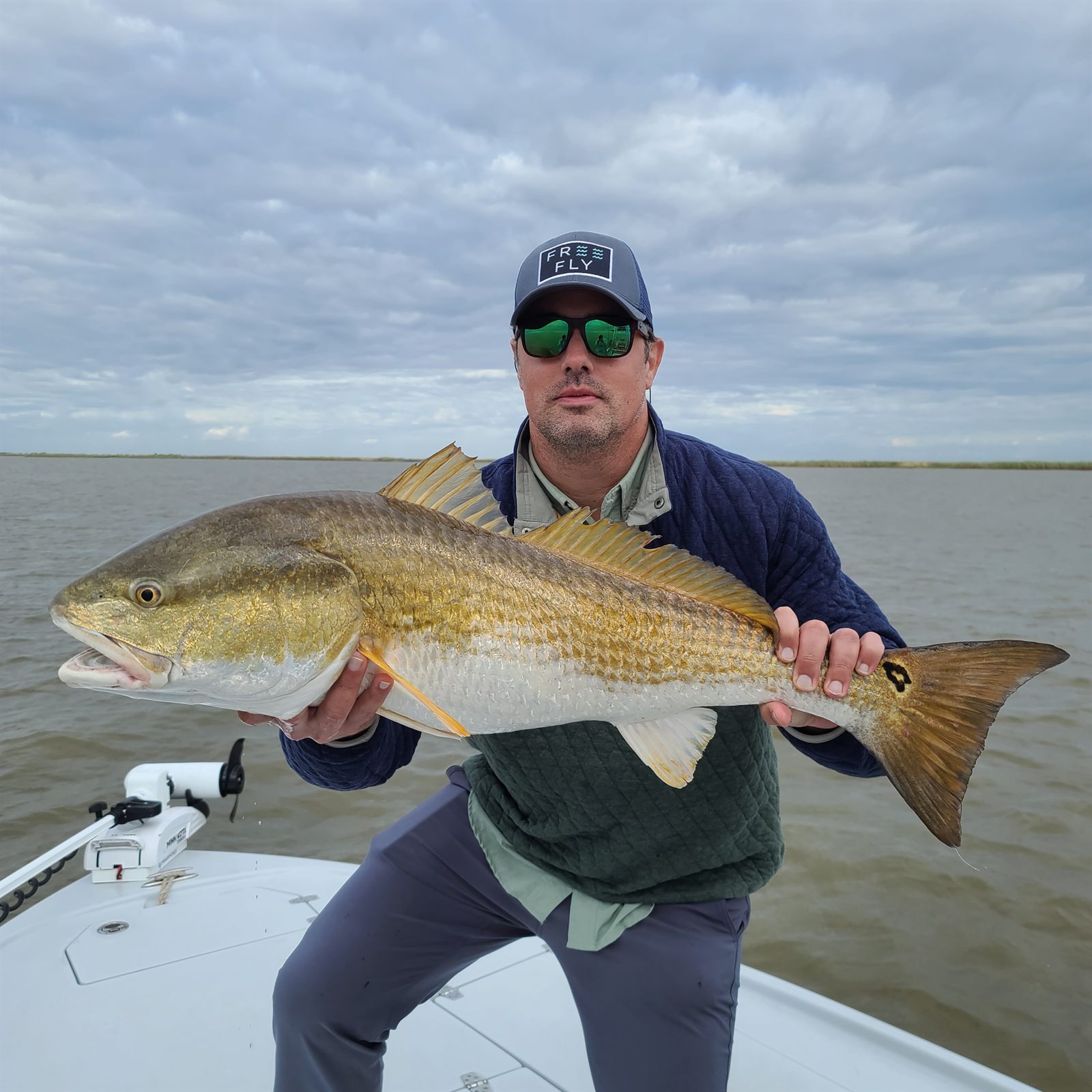
Sciaenops ocellatus
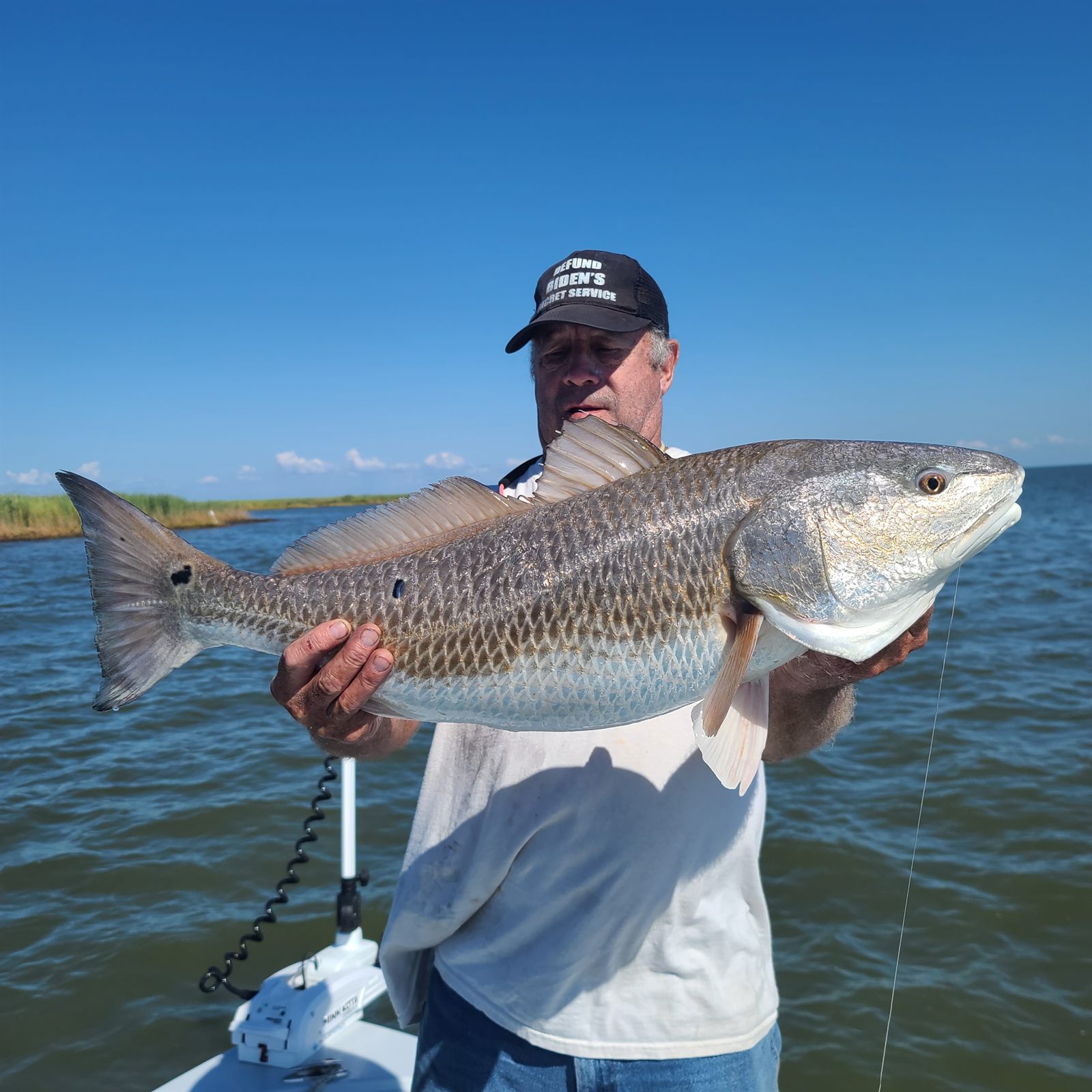
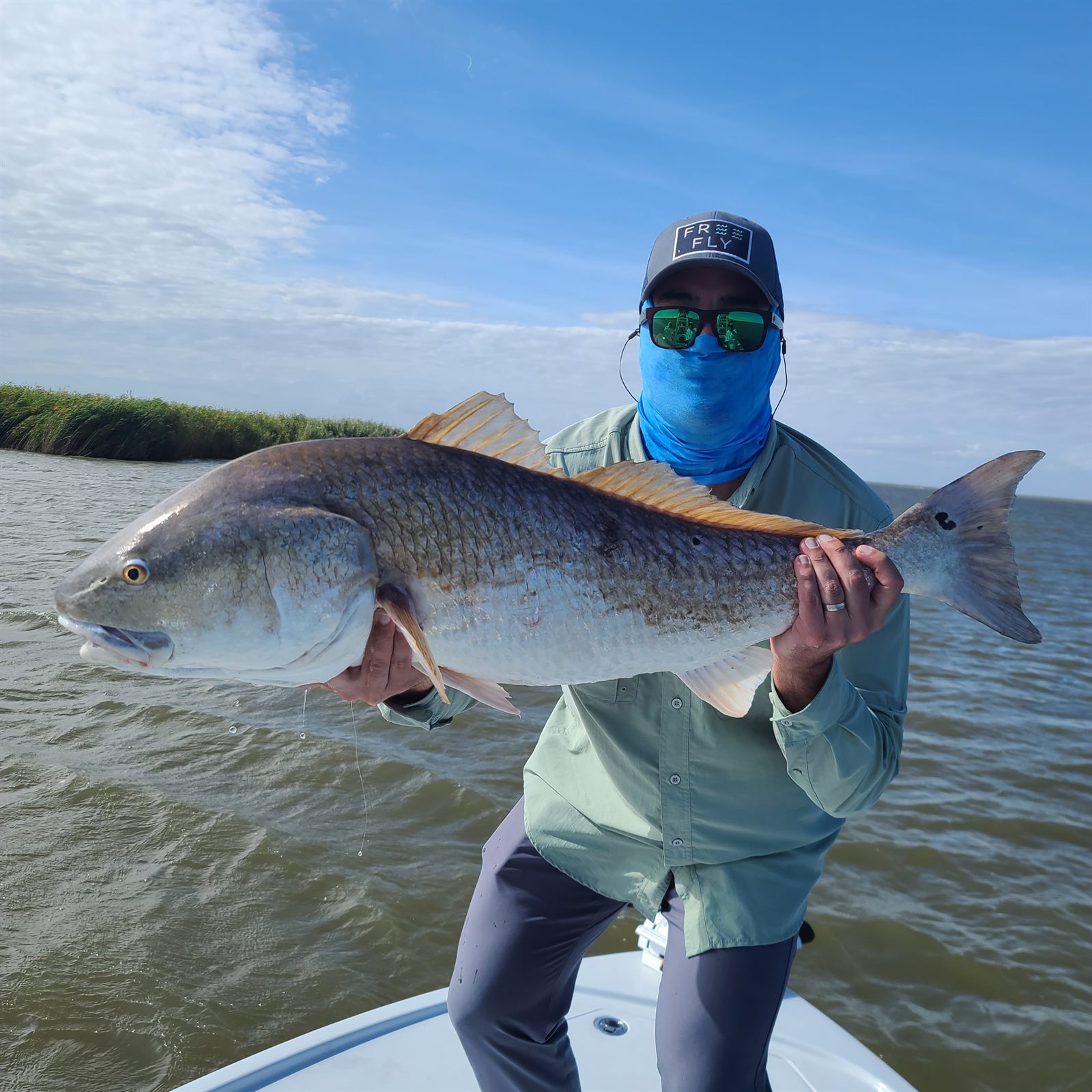
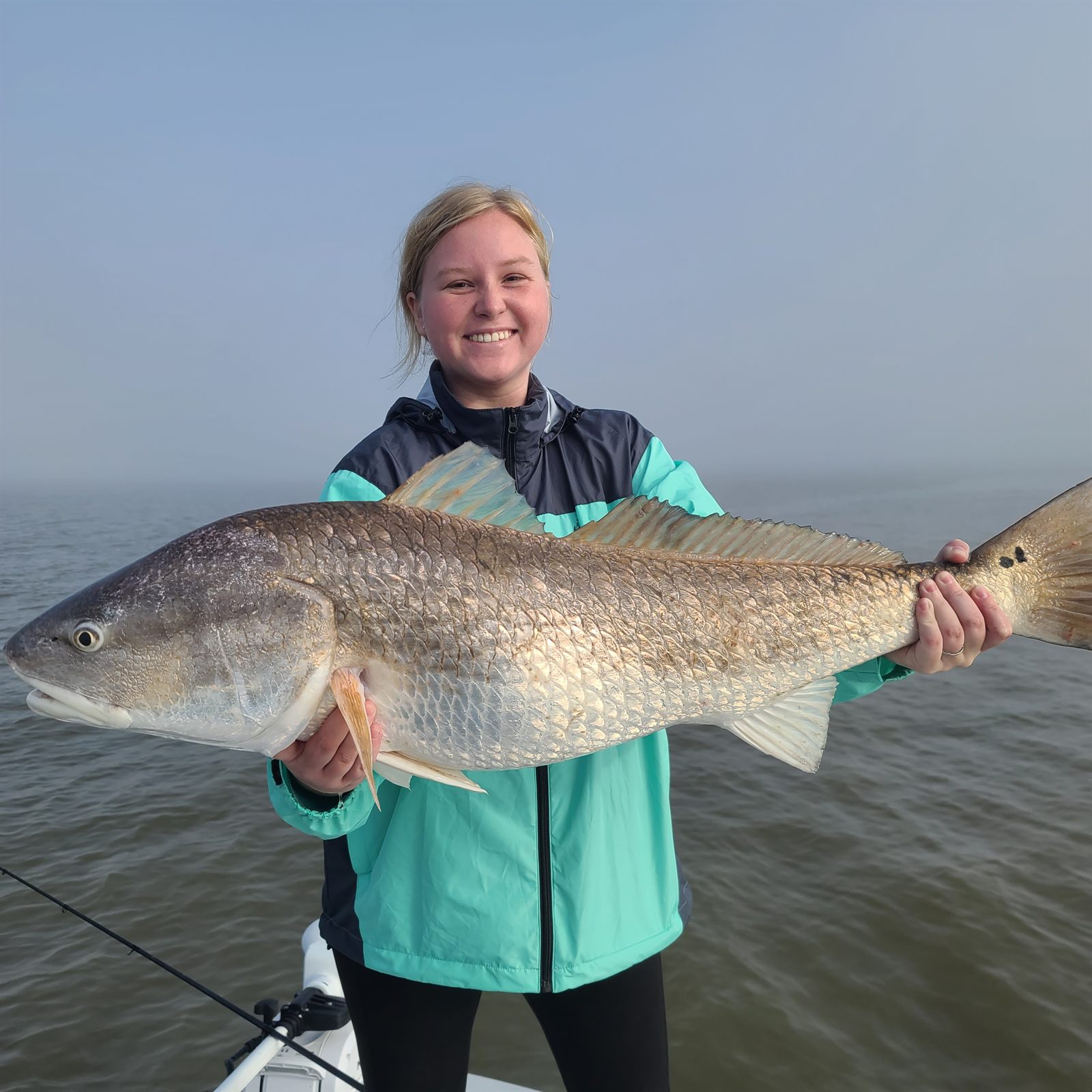
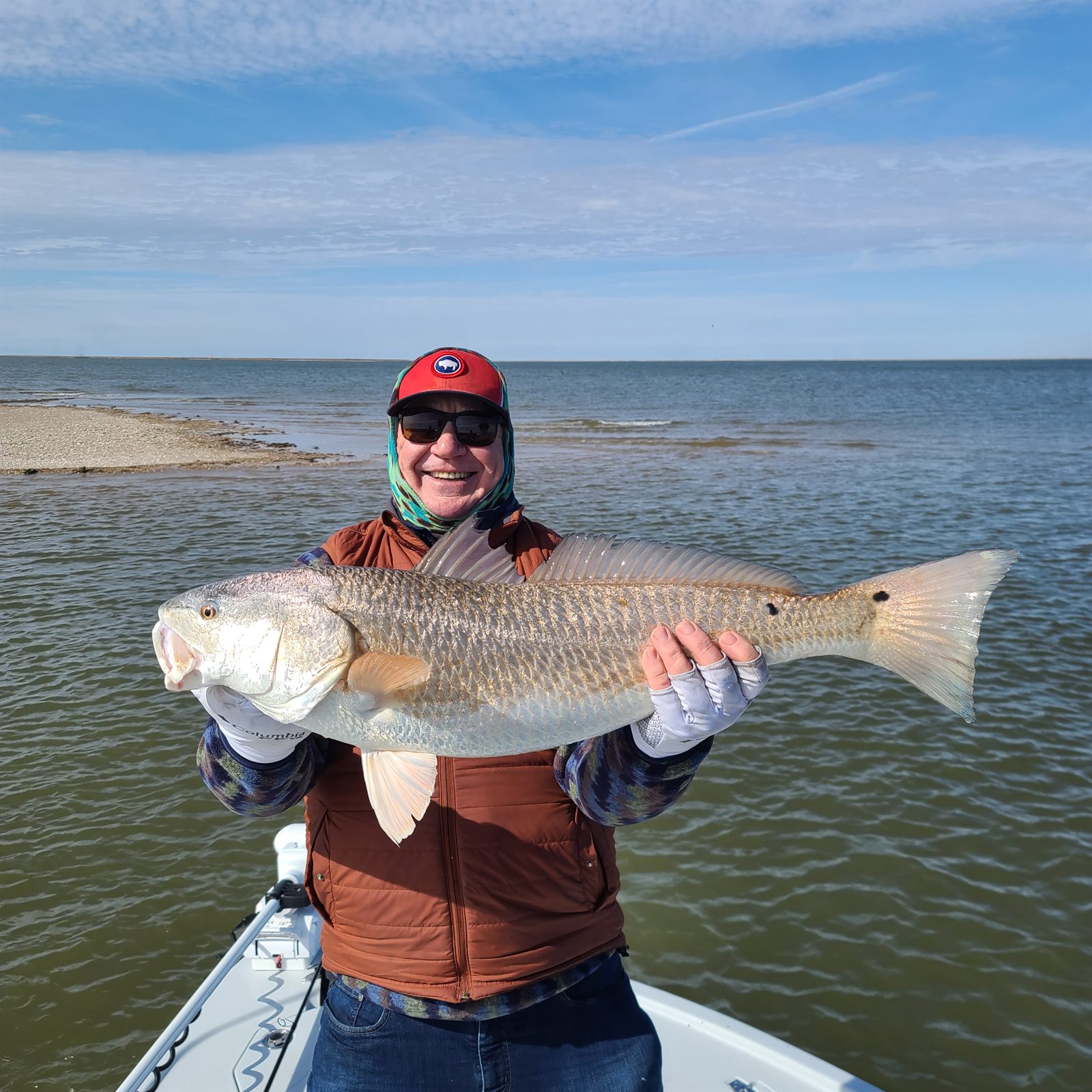
Red Drum
Current Louisiana size and limit18-27 inches total length; 4 per person per day; none over 27 inches. Captain and crew harvest is zero on charter trips.
Red drum, commonly called redfish, are the signature South Louisiana inshore target. They are usually copper to bronze with one or more dark spots near the base of the tail and no chin barbels.
- Juvenile redfish spend much of their time in bays, marshes and estuaries.
- Larger adults may move through passes, nearshore waters and offshore schools.
- Slot-size redfish are a year-round reason anglers book Vermilion Bay charters.

Cynoscion nebulosus
Spotted Seatrout
Current Louisiana size and limit13-20 inches total length; 15 per person per day, with no more than 2 over 20 inches included in that 15-fish limit. Captain and crew harvest is zero on charter trips.
Spotted seatrout have a dark green to gray back, bright sides, scattered black spots and prominent canine teeth. They are a favorite target when bait, tide and cleaner water come together.
- Often found around grass, sand, mud, reefs and moving water.
- Cold weather can push trout toward deeper channels and holes.
- Spring through fall commonly brings good trout opportunities when conditions line up.

Pogonias cromis
Black Drum
Current Louisiana size and limit16-27 inches total length; 5 per person per day; no more than 1 over 27 inches.
Black drum have a high arched back, chin barbels and strong crushing teeth. Younger fish often show vertical bars, while larger drum can grow very heavy.
- Often found near oyster beds, muddy bottoms, bayous and bay systems.
- Feeds on crabs, shrimp, oysters and other bottom forage.
- A frequent companion species on Louisiana redfish trips.

Paralichthys lethostigma
Southern Flounder
Current Louisiana size and limitNo size limit; 10 per person per day; open year-round in state waters except no possession October 15-November 30.
Southern flounder are flat, bottom-oriented fish that blend into mud, sand and shell. They can show up around drains, bayou mouths and edges where bait is being swept by tide.
- Often found where moving water concentrates bait.
- Can be a welcome table-fare bonus on inshore trips.
- Fall closures are important to confirm before keeping fish.

Archosargus probatocephalus
Sheepshead
Current Louisiana size and limitNo Louisiana recreational size limit or bag limit listed; open year-round in state waters.
Sheepshead are silver fish with dark vertical bars and strong teeth built for eating crustaceans and shellfish. They are common around structure and can be excellent table fare.
- Look near oysters, pilings, seawalls, jetties and tidal creeks.
- Late winter and spring can bring strong sheepshead action.
- They feed on crabs, shrimp, barnacles and mollusks.

Rachycentron canadum
Cobia
Current Louisiana size and limit36 inches minimum fork length; 1 per person per day, no more than 2 per vessel; open year-round in state waters.
Cobia are long, powerful fish with a broad head and dark lateral stripe. They are a seasonal nearshore possibility when Gulf conditions safely allow the plan to stretch beyond protected inshore water.
- Often found around buoys, pilings, wrecks and other structure.
- Known for strong fights and curious behavior around boats.
- Usually discussed as a weather-dependent seasonal option.

Lobotes surinamensis
Tripletail
Current Louisiana size and limit18 inches minimum total length; 5 per person per day; open year-round in state waters.
Tripletail are seasonal structure-oriented fish often found around floating debris, markers, pilings and nearshore cover when warm water and clean conditions line up.
- Often sight-fished around visible floating or fixed structure.
- Excellent table fare and a prized seasonal bonus.
- Weather and water clarity decide when this is realistic.

Mycteroperca microlepis
Gag Grouper
Current Louisiana size and limit24 inches minimum total length; 2 gag per person within the 4-grouper aggregate. Charter captain and crew harvest is zero for grouper on charter trips.
Gag grouper are structure-oriented fish more associated with reefs, rocks and offshore or nearshore structure than shallow marsh fishing.
- Seasonal access depends on weather, distance and current regulations.
- They relate to hard bottom, reefs and underwater structure.
- Included here for identification and trip-planning context.

Caranx hippos
Jack Crevalle
Current Louisiana size and limitNo specific Louisiana recreational size or bag limit listed for jack crevalle on the LDWF saltwater finfish table.
Jack crevalle are aggressive, hard-pulling fish that may show up in coastal and nearshore water. They are known more for power than table quality.
- Often travel in schools and feed aggressively on baitfish.
- Can appear around passes, channels and nearshore bait activity.
- A memorable fight when they crash into the plan.

Mugilidae
Striped Mullet
Current Louisiana size and limitStriped mullet: no size limit; 100 pounds per person per day; open year-round in state waters.
Mullet are common forage throughout South Louisiana estuaries. Watching bait movement is part of understanding where redfish, trout and other predators may feed.
- Often seen flipping or schooling in bays, bayous and marsh ponds.
- An important food source for larger predatory fish.
- Bait movement helps shape daily fishing decisions.

Trachinotus carolinus
Florida Pompano
Current Louisiana size and limitNo specific Louisiana recreational size or bag limit listed for Florida pompano on the LDWF saltwater finfish table.
Florida pompano are prized coastal fish with a compact body and bright silver sides. They are more common along sandy coastal areas and surf zones than deep marsh interiors.
- Usually associated with sand, surf and clearer coastal water.
- Can be a seasonal bonus species in the right water.
- Valued for excellent table quality.

Scomberomorus maculatus
Spanish Mackerel
Current Louisiana size and limit12 inches minimum fork length; 15 per person per day; open year-round in state waters.
Spanish mackerel are fast, toothy, seasonal fish that can feed aggressively on bait schools when nearshore water lines up.
- Often found around bait, birds, current lines and cleaner nearshore water.
- Light tackle action can be fast when schools are feeding.
- Sharp teeth make wire or careful leader choices important.

Megalops atlanticus
Tarpon
Current Louisiana size and limitNo specific Louisiana recreational size or bag limit listed for tarpon on the LDWF saltwater finfish table. Confirm current rules before harvest.
Tarpon are large, migratory coastal fish known for power and spectacular jumps. They are included as part of the broader South Louisiana coastal species list.
- More likely in seasonal coastal and nearshore windows than standard marsh redfish trips.
- Often connected to bait movement, warm water and migration patterns.
- A bucket-list fish when conditions and timing come together.
Plan by conditions
Ask what is biting before you book.
Capt. Troy builds the day around the season, wind, tide, water clarity and your crew. Redfish are the core target, but trout, black drum, flounder, sheepshead and seasonal nearshore fish can shape the plan.
Regulations can change. Always confirm current Louisiana Department of Wildlife and Fisheries rules before harvesting fish. Most charter guests age 18 or older should purchase the 3-day Charter Passenger Saltwater License; LDWF currently lists it at $20 for both residents and nonresidents.